Back to Portfolio
Pizza Cutter
Arcade Slicing Game — built for the 2026 Colorado Pizza Festival
Live — playable in the browser; Android release in progress
Arcade Slicing Game — built for the 2026 Colorado Pizza Festival
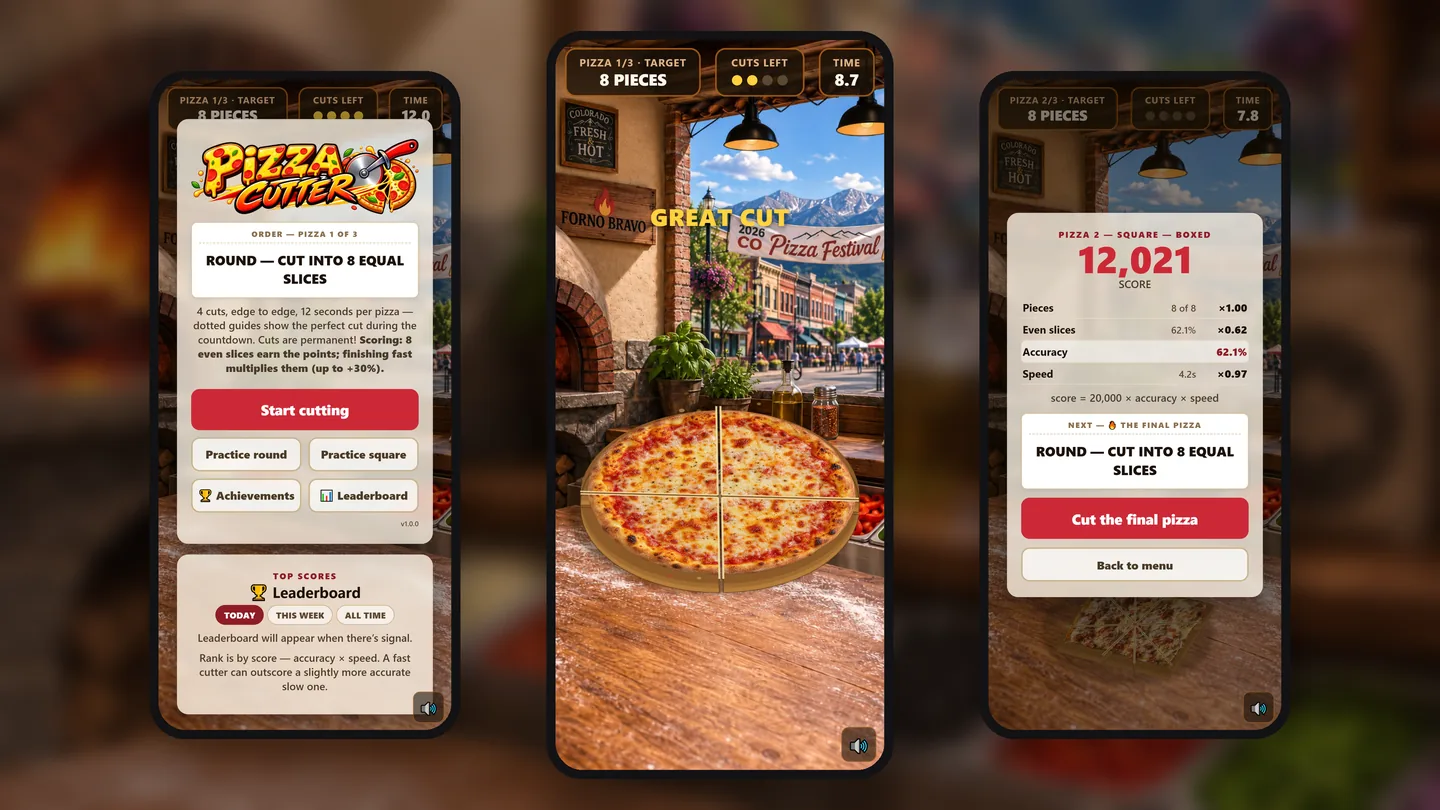
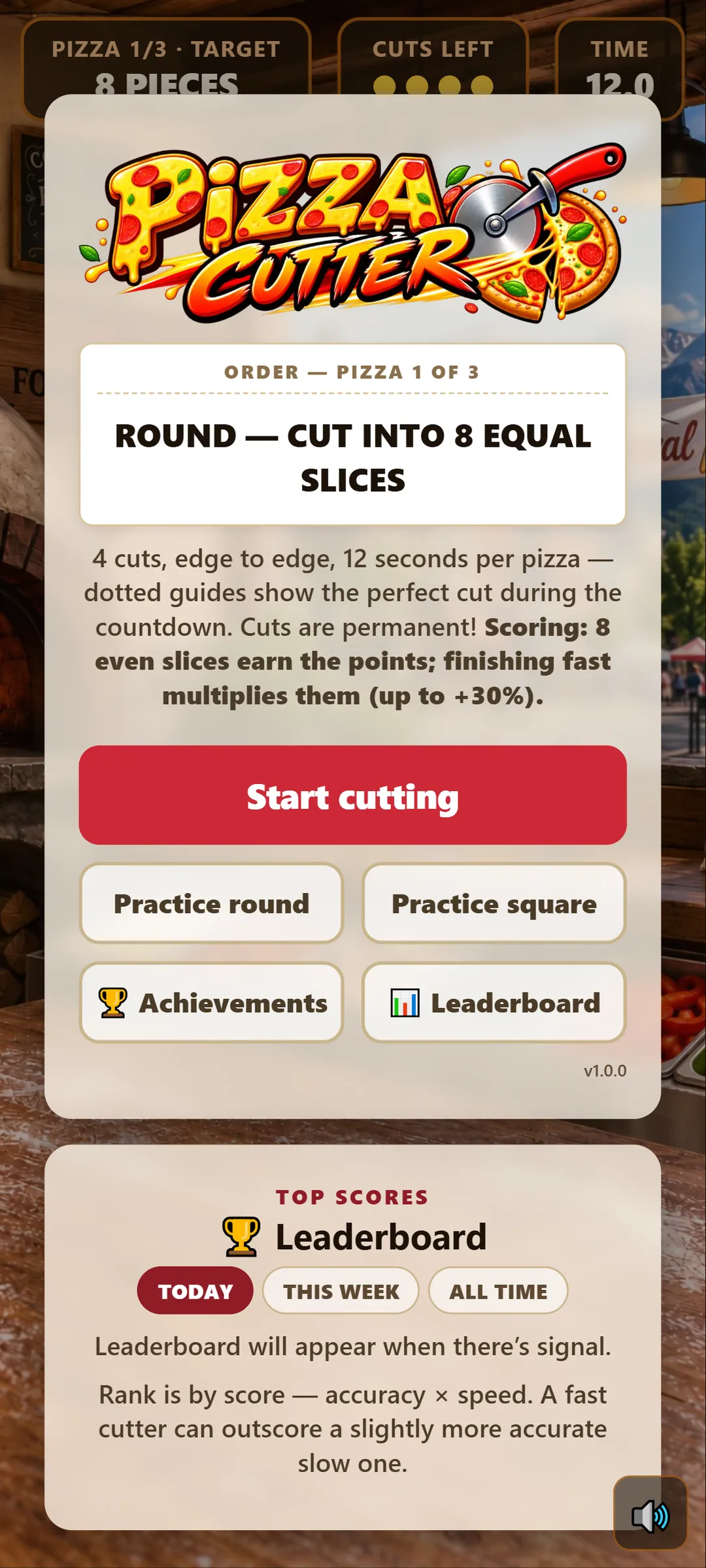
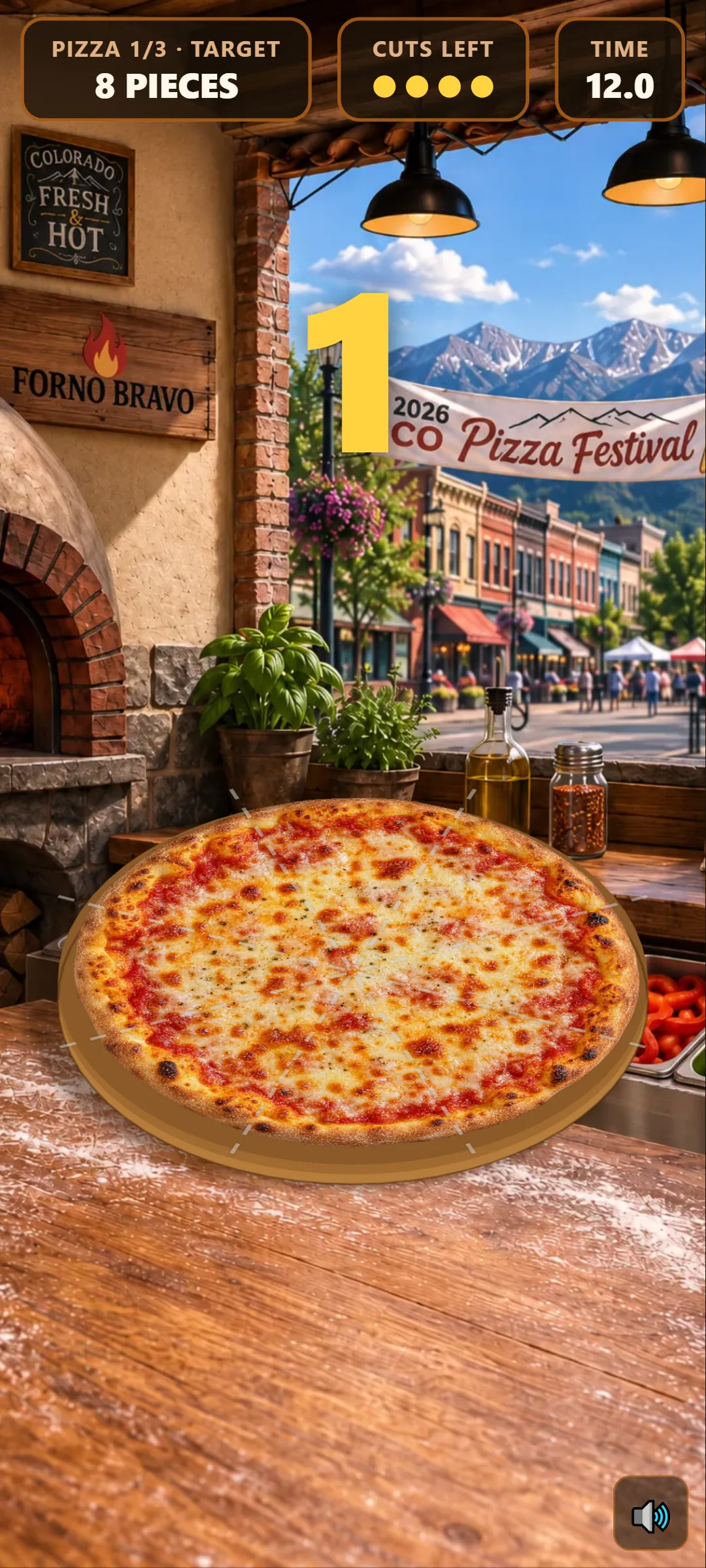
Pizza Cutter is a touch game built for the Howarth Tech Solutions booth at the 2026 Colorado Pizza Festival in Longmont. A run is three pizzas — round, square, round — and each must be cut into eight equal slices with four straight cuts in twelve seconds. Dotted guides show the ideal cuts during the countdown, then disappear; cuts are permanent.
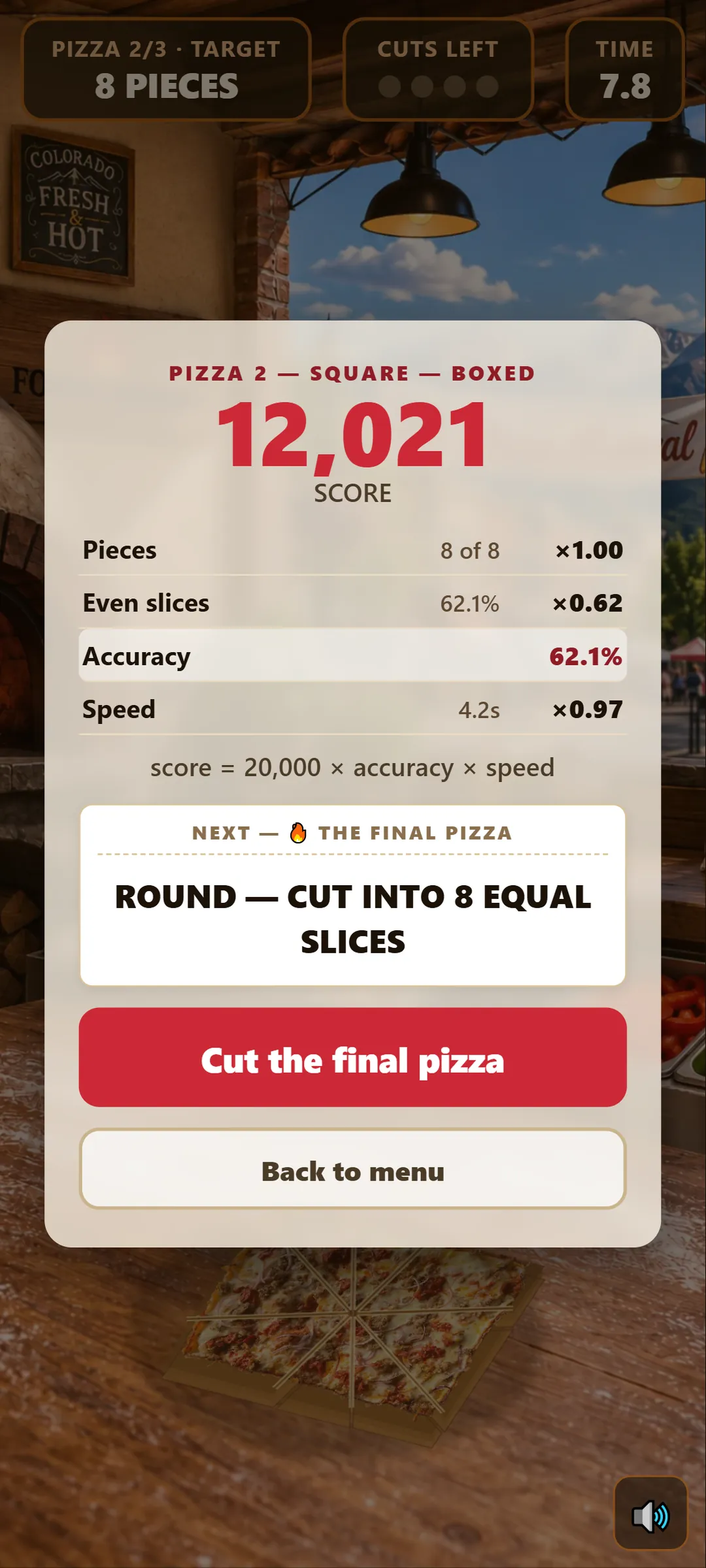
Every cut is real geometry: the pizza is split into polygons, and the score measures how close the result is to eight equal pieces, multiplied by a speed factor that only counts when the cutting is accurate. Scores post to an online leaderboard by day, week and all time. The same game is being packaged for Android with Capacitor, adding achievements and Google Play Games.
Built by Howarth Tech Solutions.
No framework and no bundler — plain ES modules, a 2D canvas and a small server API.
The geometry, gesture and scoring code are pure modules with no DOM access. The renderer works in pixels and the engine in abstract units, so the same engine runs in the browser, inside the Android app, and under Node for the test suite.
A short, readable rule set — and a score that rewards cutting well, not swiping fast.
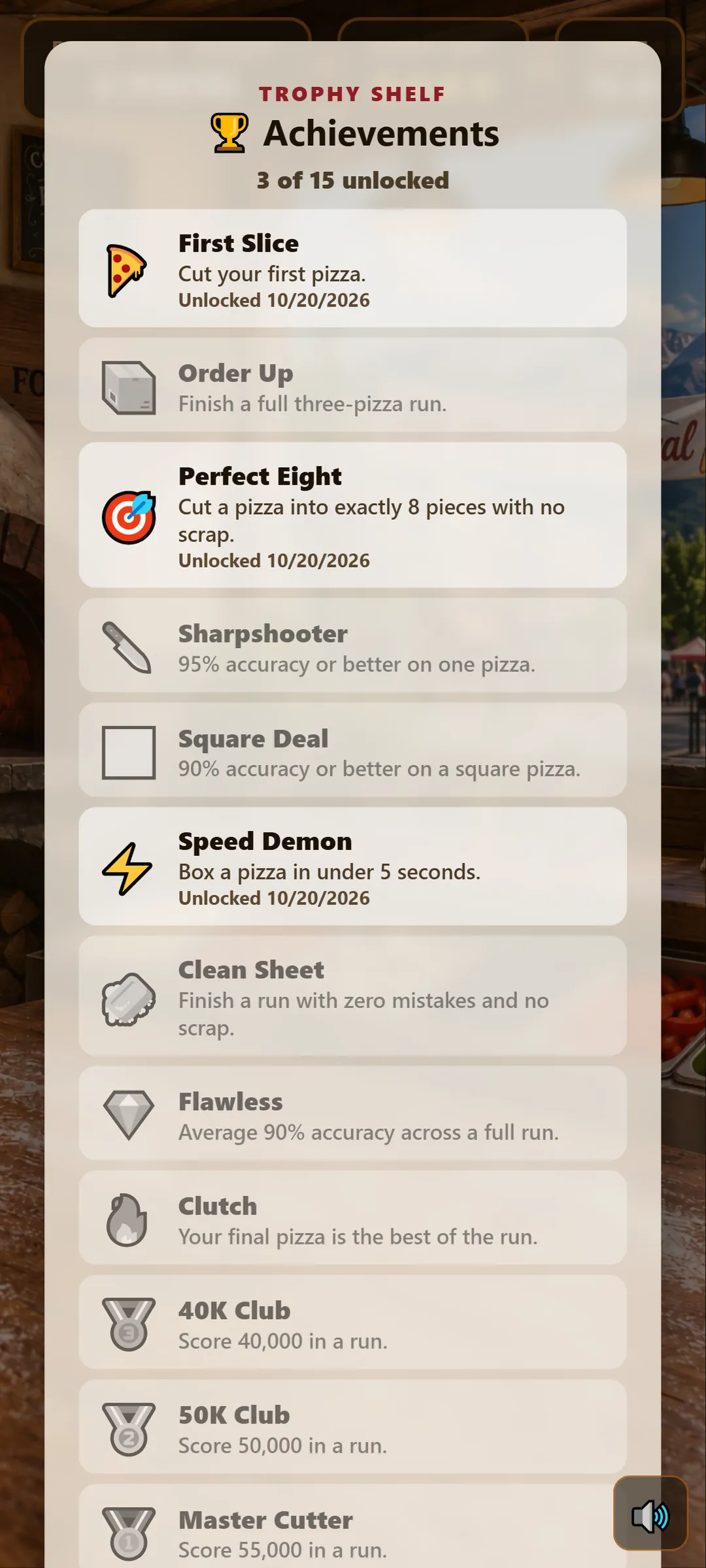
Order ticket to trophy shelf, on a phone.
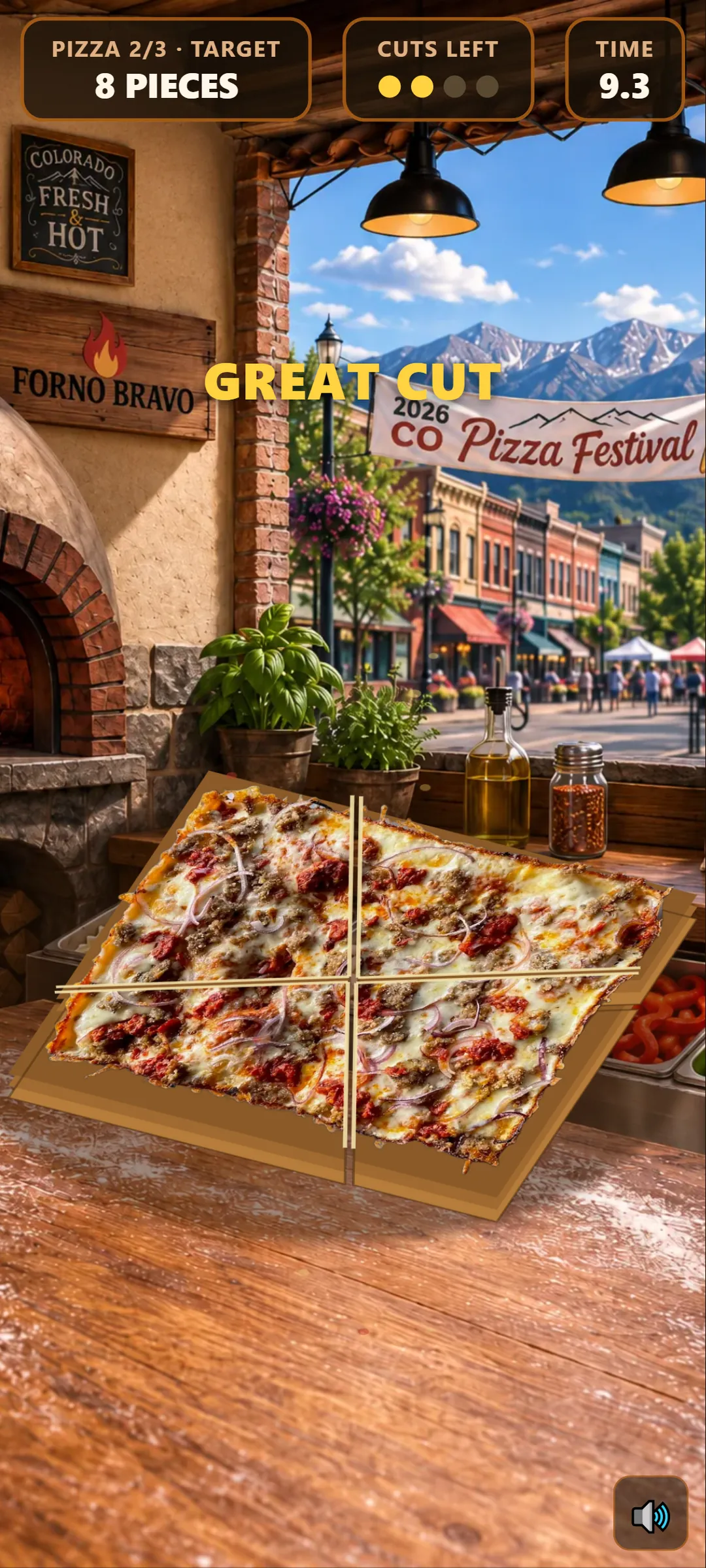
The engineering behind a game that has to feel fair to a stranger in ten seconds.
A pizza is a set of convex polygons. A straight cut always splits a convex polygon into two convex polygons, so splitting stays simple and exact no matter how many cuts cross. Each edge records whether it is crust or a cut face, which drives both the rendering and the scoring.
Players wiggle, curve and overshoot. The gesture module turns a raw swipe into the straight line the player meant, then the engine checks that it crosses the pizza edge to edge. A swipe that misses is a miss, not a random slice.
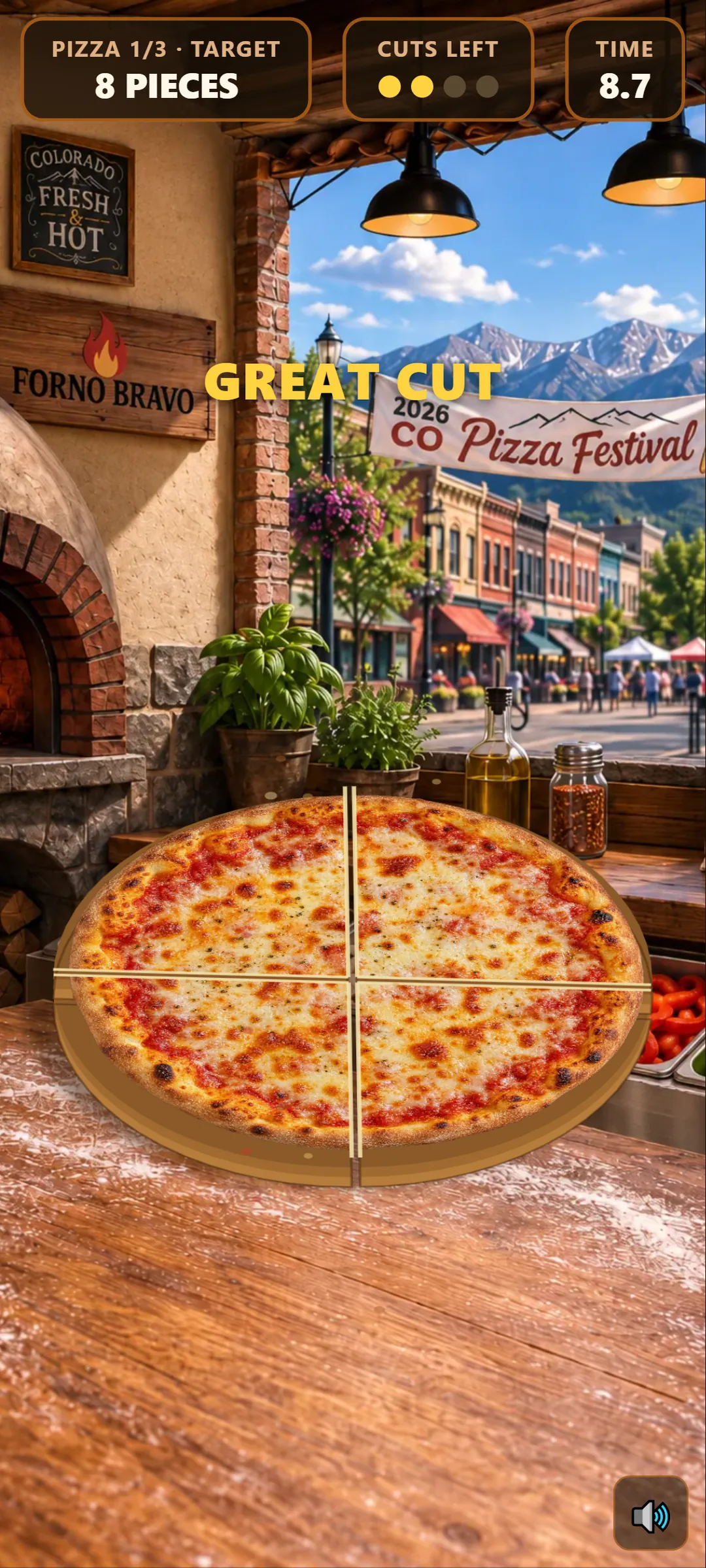
Accuracy combines the piece count, how much of the pizza sits in the wrong slice, and how consistent the slice shapes are, minus penalties for slivers and misses. Speed multiplies the result but is gated by accuracy, and a test proves a slow, perfect run beats a fast, sloppy one.
Geometry, gesture and scoring have no DOM dependencies, so 30 tests run directly under Node: equal-division cases, edge-to-edge detection, sliver handling and score ordering. The tuning constants live in one config object, not in the code.
A small PHP endpoint on the HTS server keeps the best run per device, accepts each submission once (idempotent by run), filters names and rate-limits posting. The festival version also checks run timing on the server.
No published plugin covered Capacitor 7 with both Play Games achievements and leaderboards, so the Android build carries a ~100-line Play Games Services v2 plugin. On-device achievements are the source of truth and are mirrored to Play Games when the player signs in.
A small game with real engineering under it, shipped to a live event.
Pizza Cutter went from idea to a festival booth with a live leaderboard. If you have an event, a promotion or a product that needs something people will actually play, let’s talk.
Plain JavaScript ES modules and Canvas 2D with no framework or bundler, a PHP leaderboard API, and Capacitor for the Android build.
Each cut splits the pizza into exact polygons. Accuracy measures how close the pieces are to eight equal slices; speed multiplies the score only when the cutting is accurate.
Yes — Pizza Cutter was built for a festival booth. See our software development service to start a project.
Tell us what you have in mind and we'll come back with an approach and a flat quote — no obligation.