Back to Portfolio
LazrChess
Multiplayer Laser Strategy Game — browser & Android, free, no ads
Live — playable at lazrchess.com and on Google Play

lazrchess.com
Multiplayer Laser Strategy Game — browser & Android, free, no ads
LazrChess is a laser-strategy board game for the browser and Android. Two players move and rotate mirrored pieces on an 8×10 grid; at the end of every turn a laser fires automatically, reflecting across the board until it strikes something — win by steering the beam into the opposing king while shielding your own.
It plays in any modern browser at lazrchess.com and ships on Google Play as a Trusted Web Activity, so the installed app renders the live site: one deploy updates web and Android simultaneously with no store resubmission. The game offers single player against four AI difficulty tiers (including an unlockable boss-level opponent), real-time online multiplayer with shareable four-character session codes, and pass-and-play on a single device. It is free, with no ads, accounts, or tracking.
LazrChess is an original implementation of the laser-chess concept popularized by Khet® 2.0. It is not affiliated with or endorsed by the Khet trademark holders. Built by Howarth Tech Solutions.
A full-stack JavaScript build — one shared rules engine, one codebase, two platforms.
The Node 20 server imports the same ESM move, laser, and game-state modules the React client uses (require(esm)), making one codebase the single source of truth for game physics on both sides of the wire. Server-side move validation means clients can never cheat — the server re-runs every move through the shared engine before accepting it.
Three ways to play, four ways to lose to the AI, and one set of rules enforced on both sides of the wire.
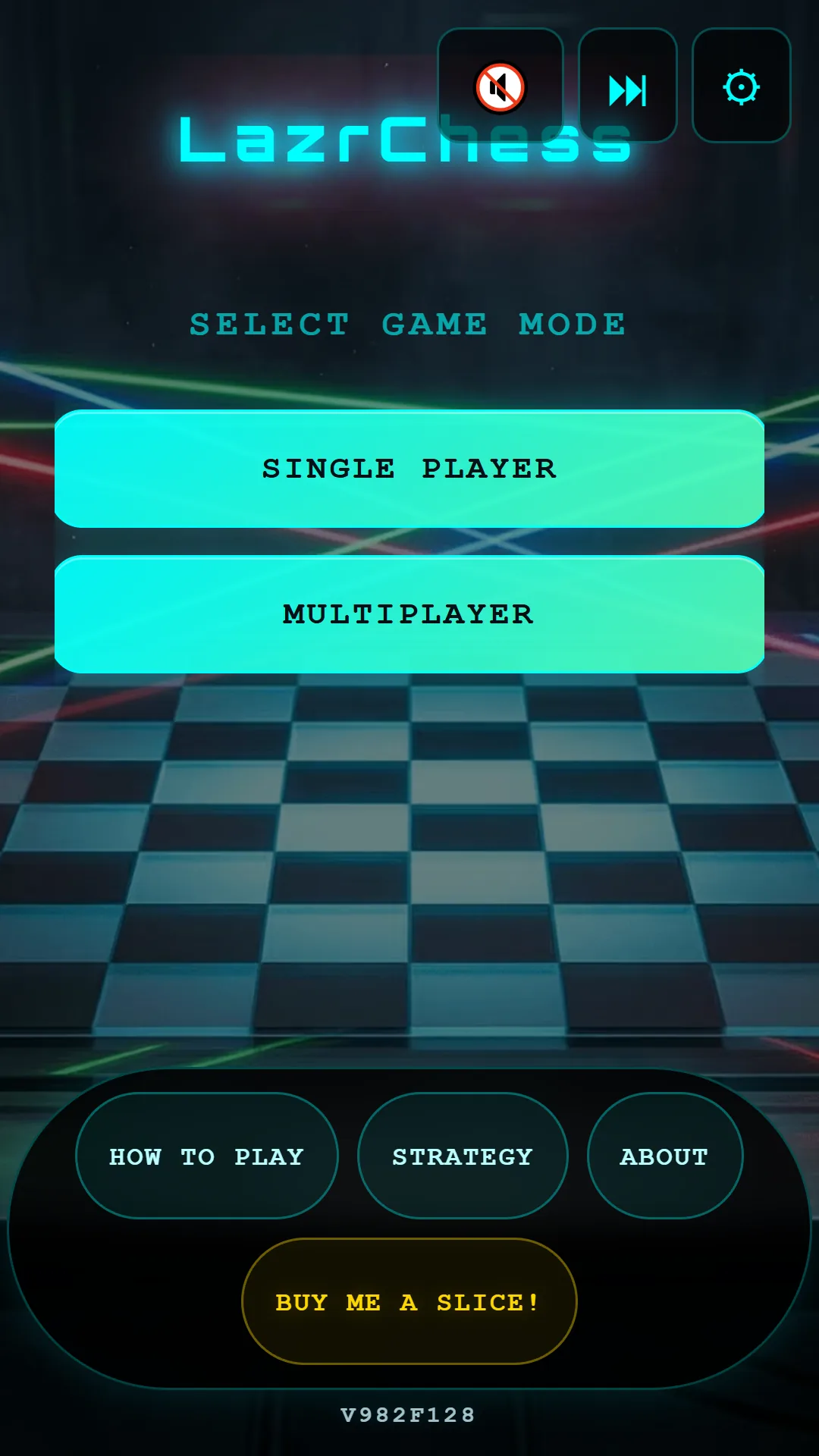
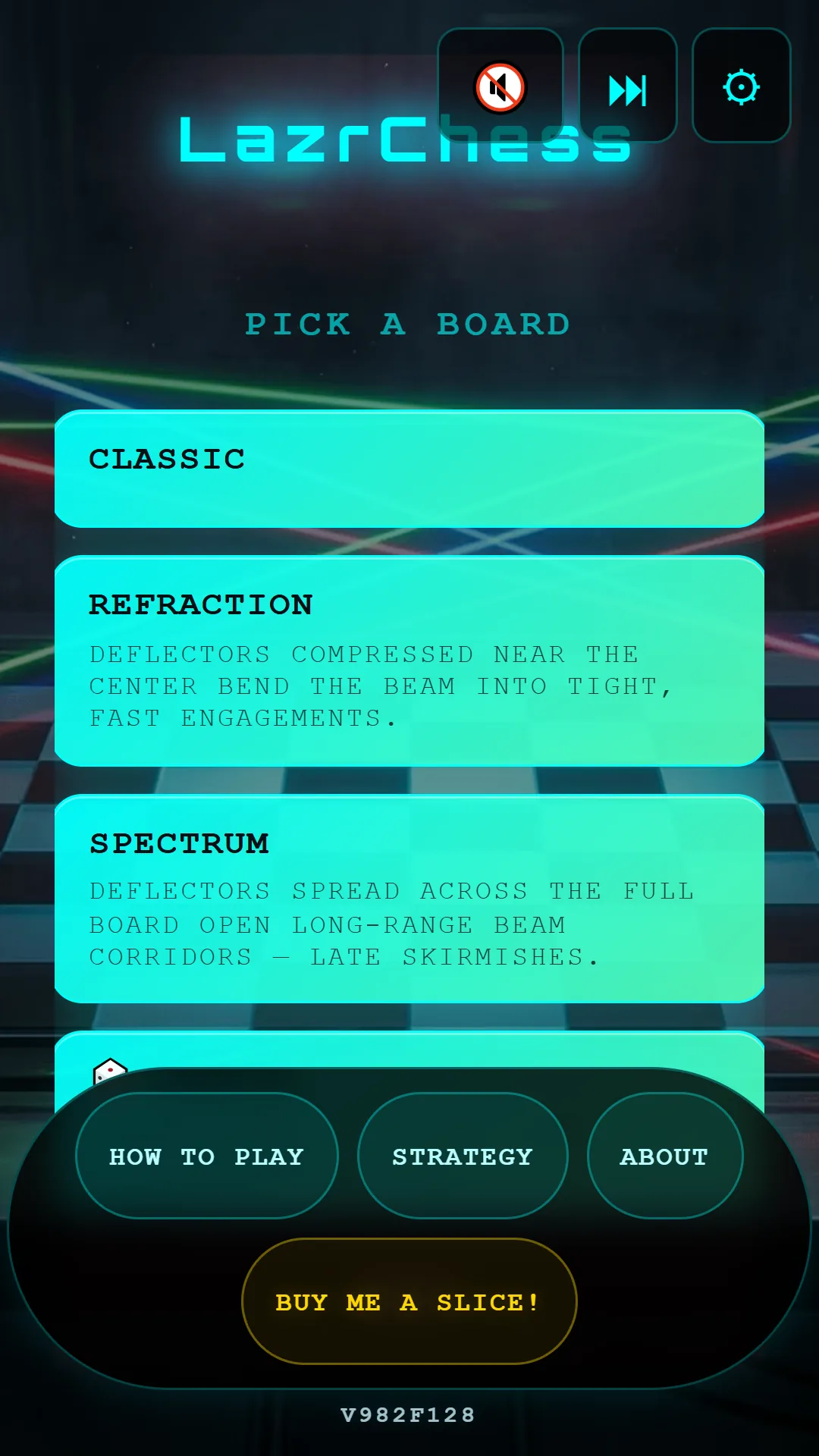
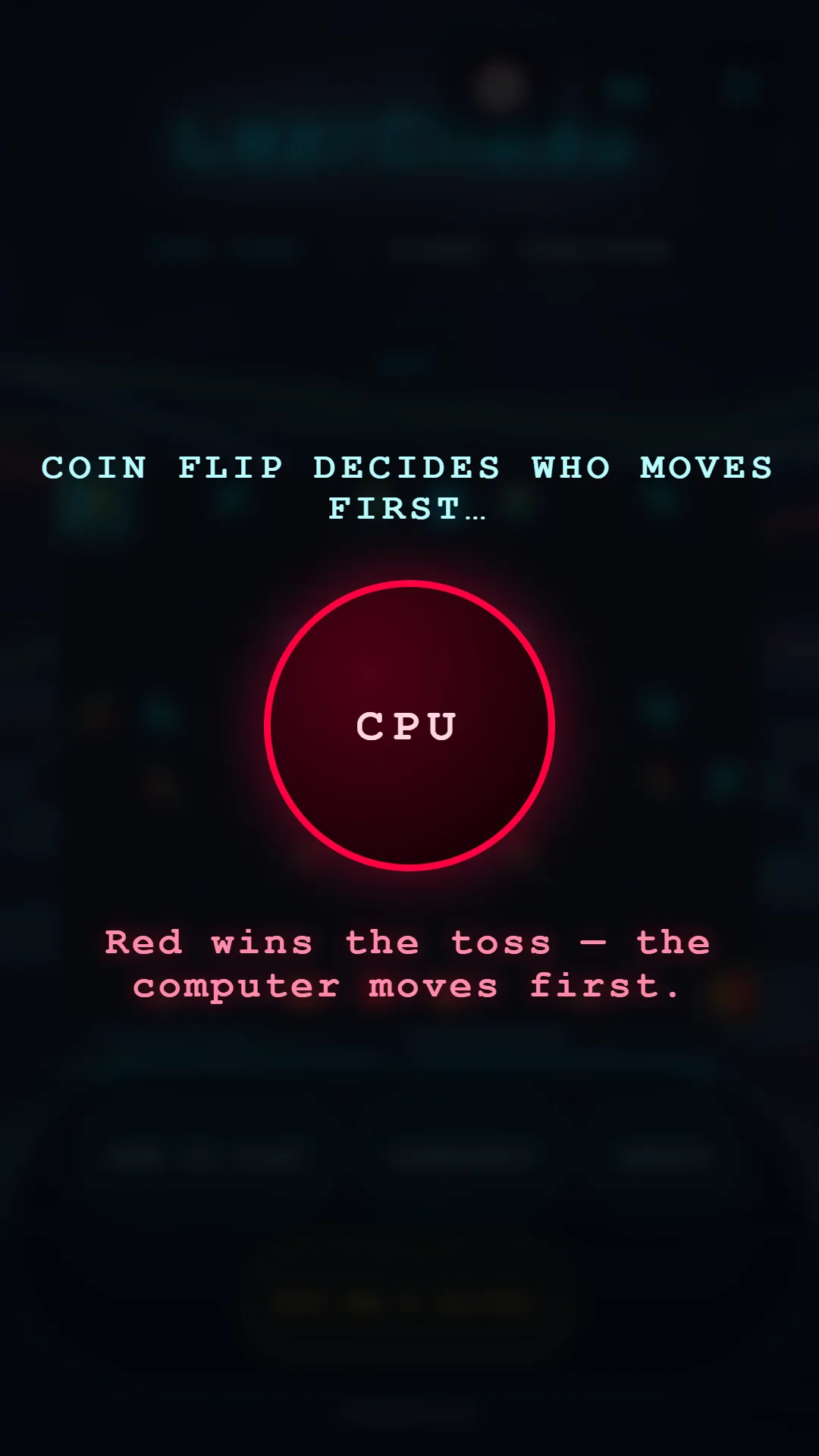
From main menu to multiplayer lobby — phone and tablet.
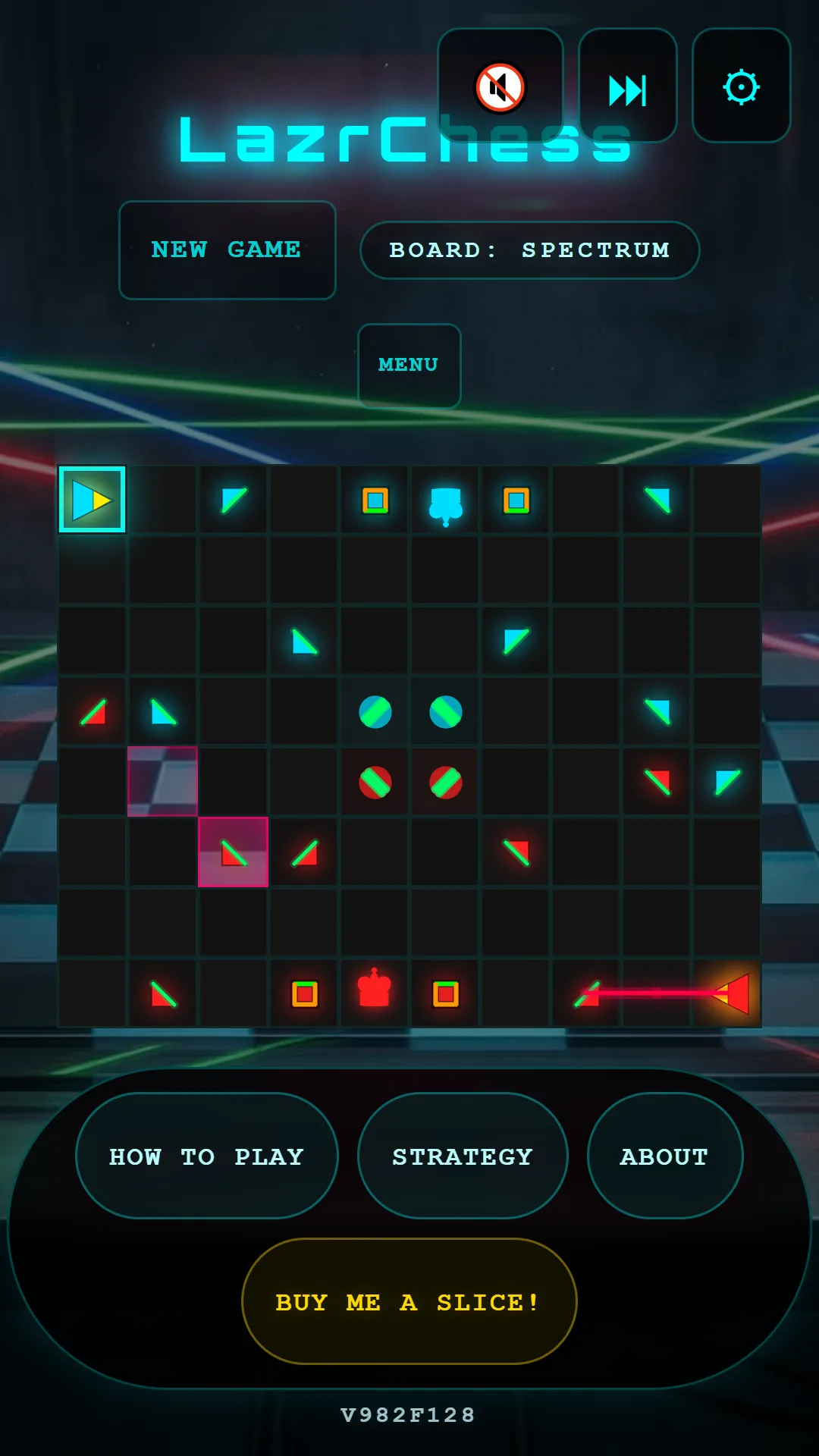
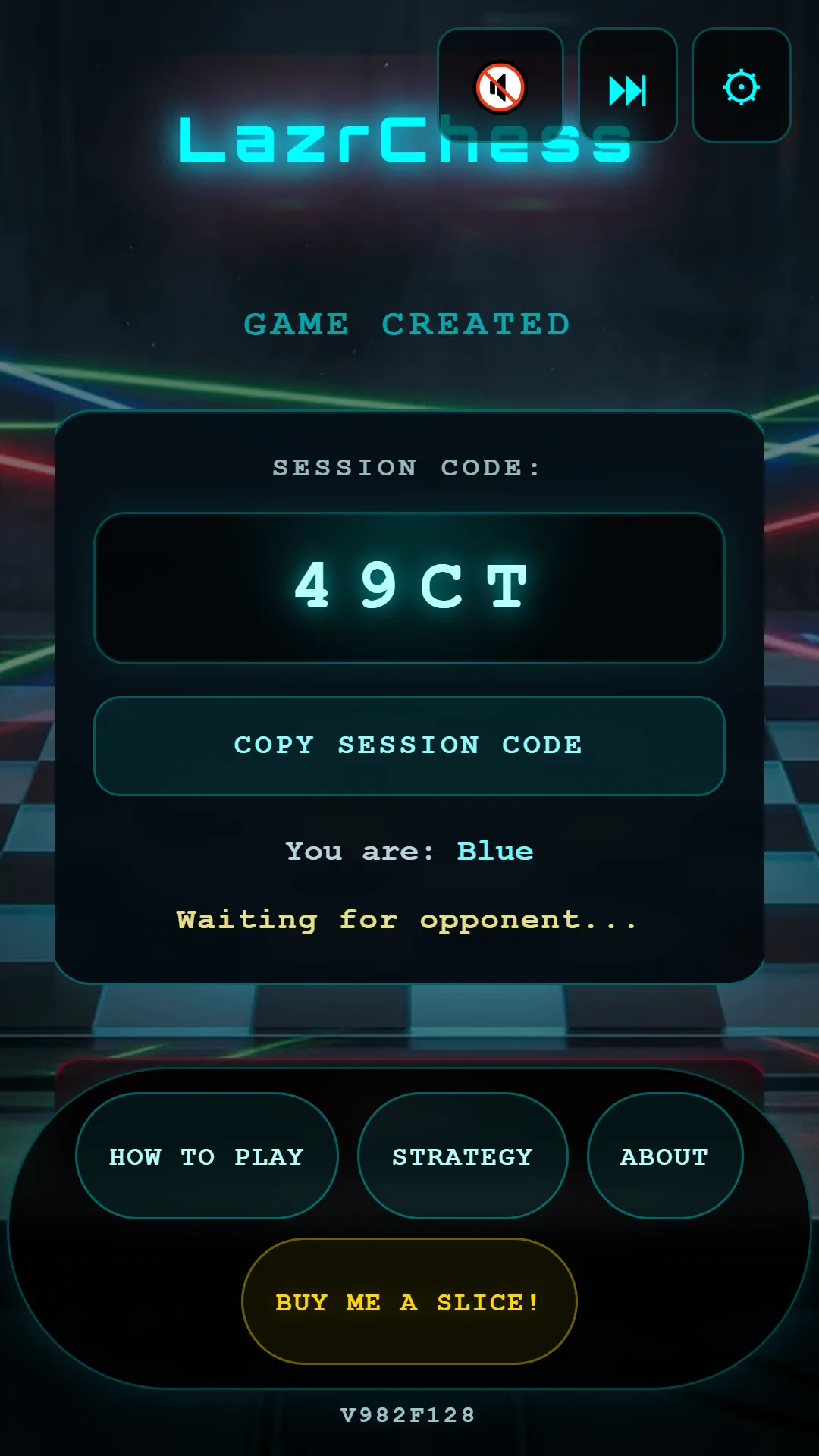
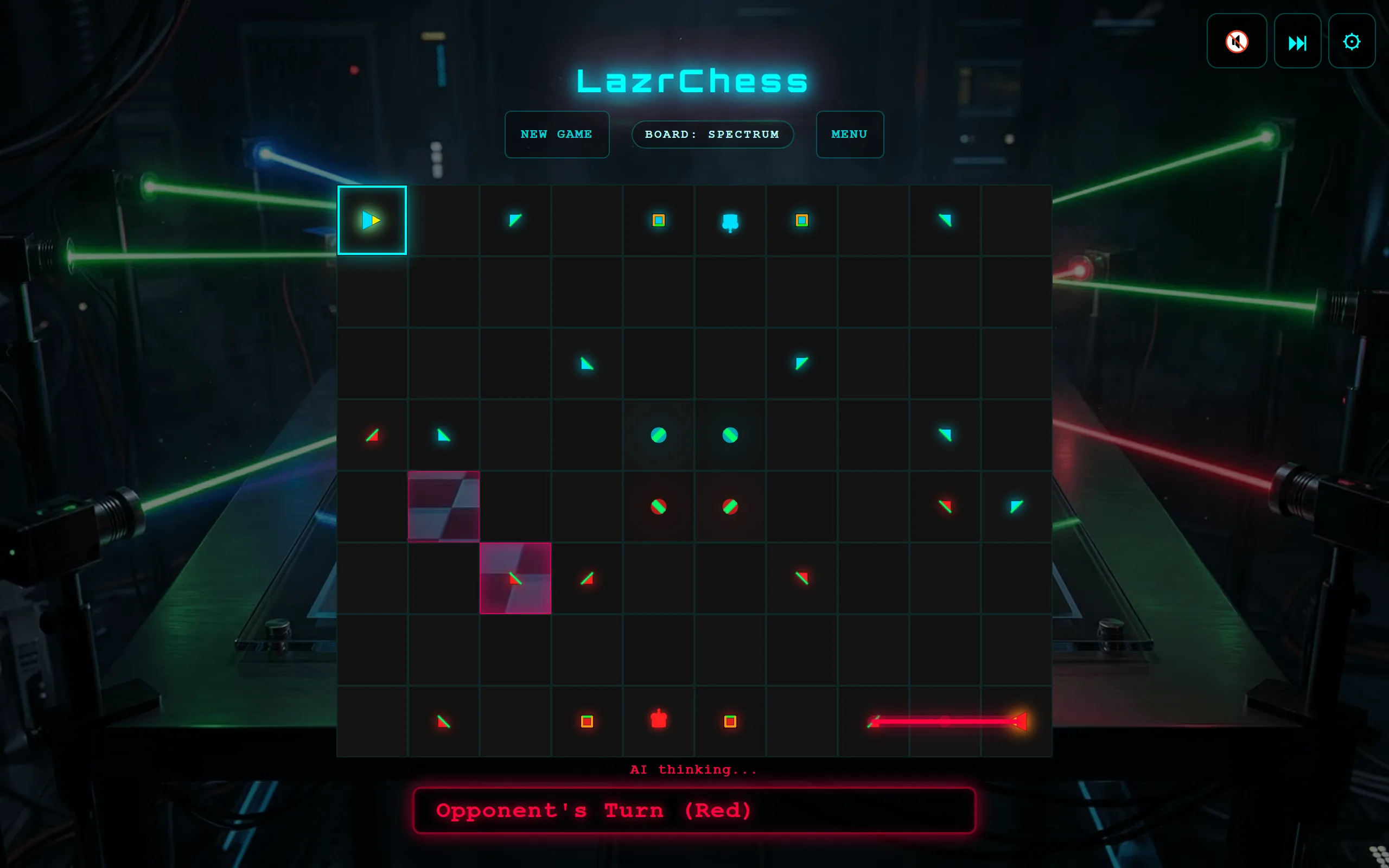
The engineering decisions that make the game reliable, fair, and maintainable.
The Node 20 server imports the same ESM move, laser, and game-state modules the React client uses (require(esm)). One codebase is the single source of truth for game physics on both sides of the wire — the AI, the server validator, and the client renderer all execute identical logic, which eliminates a whole class of desync bugs.
Socket.IO sessions with server-side move validation mean every move is re-run through the shared engine before it's accepted — clients cannot submit illegal moves. Per-player rejoin tokens stored in-memory let both players reconnect and resume a game after a dropped connection or tab close, with no database and nothing persisted beyond the session lifetime.
Each difficulty tier uses minimax search with alpha-beta pruning, depth-tuned so Easy plays shallow and Hard searches deep. An exhaustive first-move fairness audit in the Jest suite — 108 tests — verifies that no board configuration allows a win on the opening move, proving the starting positions are balanced for all three setups.
A network-first service worker guarantees the installed Android app can never pin an old build — every deploy to the web is the deploy to Android, with no Play Store submission. Digital Asset Links are verified against both the upload certificate and the Play App Signing certificate so the TWA association survives signing changes.
GitHub Actions builds a Docker image on every push to main and deploys it to the DigitalOcean VPS behind Caddy (automatic TLS). The footer displays the live commit hash so it's always clear which build is serving traffic. The whole pipeline — build, push to GHCR, SSH deploy — completes without manual steps.
A ~50-line custom router renders real anchor elements for all navigable views, keeping URLs crawlable without a routing library. The hero background was optimized from a 728 KB PNG to a 105 KB AVIF. The overall bundle stays small — no router package, no animation library, just the game logic and the UI.
End-to-end product delivery from a rules engine to two app platforms.
LazrChess demonstrates what it looks like when a game engine, networked state, AI, and a cross-platform deploy are all built right — shared logic, server-authoritative, continuously deployed. If you have a real-time web app or Android project that needs the same rigour, let's talk.
A full-stack JavaScript build — React on the front end, Node.js with Socket.IO for real-time multiplayer, and a shared deterministic rules engine so single-player and online play behave identically.
Moves sync over WebSockets via Socket.IO with server-authoritative state and session persistence, so a dropped connection never loses a game.
Yes — real-time systems are a core strength. See our software development service to start a project.
Tell us what you have in mind and we'll come back with an approach and a flat quote — no obligation.